
Tuesday, November 29, 2016


Thursday, November 17, 2016
Water Festival of Cambodia
In the mid-November, Phnom Penh gears itself for the Water Festival. This is one of the most important events of the year.
First, it is also the Moon Festival, a thanksgiving for a bountiful harvest. In 2016, it so happened that around Water Festival, November 14, the Moon was at its biggest since 1948.
On this Water and Moon Festival or Bon Om Touk as the Khmer call it, offerings of flowers and other products as well as the lighting of candles and incense are made in villages. The wax from the lighted candles on this celebration is considered predictors of the year's climate and harvest. The more wax drops, the more rain and, thus, good harvest.
In the ceremony usually presided by the King of Cambodia, the different Provinces are represented each by a candle so predictions are made for each Province as well. For the people of Cambodia, this is part of their tradition which they cherish until now.
The Tonle Sap River also reverses its flow at this time, a natural phenomenon celebrated during this festival. As part of the celebration, a boat race is held for 3 days. Around 259 boats participated, many represented some of the villages. The cheering is loud for those whose villagers come to support their oarsmen.
What I love most is watching the locals in the parks, enjoying with their families on spread mats and munching on their favourites: fried tarantulas, barbecued chicken, pork, fish balls and frogs, shellfish, noodles and eggs.
 |
| Illuminated Boat - Cambodia Water Festival |
First, it is also the Moon Festival, a thanksgiving for a bountiful harvest. In 2016, it so happened that around Water Festival, November 14, the Moon was at its biggest since 1948.
On this Water and Moon Festival or Bon Om Touk as the Khmer call it, offerings of flowers and other products as well as the lighting of candles and incense are made in villages. The wax from the lighted candles on this celebration is considered predictors of the year's climate and harvest. The more wax drops, the more rain and, thus, good harvest.
In the ceremony usually presided by the King of Cambodia, the different Provinces are represented each by a candle so predictions are made for each Province as well. For the people of Cambodia, this is part of their tradition which they cherish until now.
The Tonle Sap River also reverses its flow at this time, a natural phenomenon celebrated during this festival. As part of the celebration, a boat race is held for 3 days. Around 259 boats participated, many represented some of the villages. The cheering is loud for those whose villagers come to support their oarsmen.
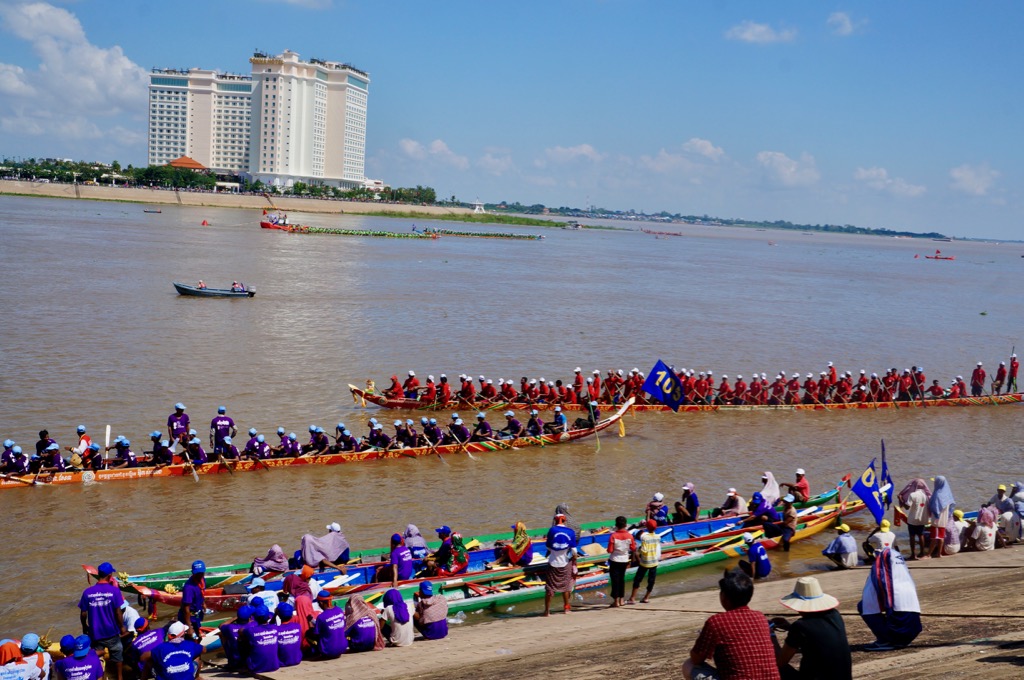 |
| Boat Race - Cambodia Water Festival 2016 |
Every night, fireworks light up the Phnom Penh sky around the riverside. Illuminated boats slowly parade in the Tonle Sap River giving magic to the celebration. Concert sites entertain the crowd of about 3 million. It is Phnom Penh in its full display.
 |
| Illuminated Boat - 2016 Cambodia Water Festival |
 |
| Snacks at the Cambodia Water Festival |
Time your visit to Phnom Penh for this festival and celebrate with the locals.
Read more:
Water Festival of Cambodia Tuesday, January 26, 2016
5 Top International Travel Tips from Road Warriors
Ever dreamt of going places? Travel to far shores? Or are your fears of the strange and unfamiliar make you hug the shores of your familiar 9-9 existence?
There are now so many places to visit as easier access and technologies have moved them closer. Information abound even about places we have not heard of in history classes. CNN and BBC are every day competing to rum them through our senses.
Now, the problem is not just fear of the unfamiliar but the too much information that make us fear.
The "what ifs" of fear utterly defeat the "what could bes" of dreams.
For those who still dream of the cedars of Lebanon, the silk of China, and the maharajahs of India, this lens will offer you tips coming out of your yin yang.
But hey, don't just disregard them.
Good trip preparation and planning cannot just be taken for granted. Get those stickies ready and post them on your fridge. Your trip success begins there.
1. Luggage
The self-destroying suitcase! The handle-less handbag!! The splintered hardshell! The 20-Kilo-when-empty mega-case! The one-trip-wonder! Haven't you had one of these? Funny to frustrating. And today, you undoubtedly have bags that don't make sense anymore in the new travel environment.
The concept of luggage has evolved. Quantity is still an issue...but today it isn't "How Much"....but "How Little". This really affects your choice of luggage. The search for that magic bag starts with looking for the lightest you can get at the perfect size to give you enough carrying space without taking you beyond the airline weight limits. Of course, weight is not the only concern when you choose your luggage. You probably have seen your luggage cracked or its zippers burst or probably gone with all your things placed inside the airline plastic bag.
Know that the soft-sided ones are the most expandable. The hard-sided cases protect fragile items that you might carry with you. However, hard-siders are sometimes heavy and can be cracked and shattered when handled in airports as most likely they will not be handled with care.
Nylon (the ballistic one used to cover bullet-proof vests are the most tear-resistant) and polyester are the best materials as they are much lighter and can be treated to make them stain-resistant. Go for brightly coloured luggage as it is easier to pick out as it circles around the carousel. Forget leather...the baggage guys won't be impressed! Don't forget the packing cubes to go with your luggage.


2. Travel Insurance
You hope nothing will happen, but and if the husband and kids are with you, too, you are really tempting fate. At its most basic, it provides you with professional advice in case of illness abroad, covers all your expenses or reimburses you for part of them, anyway.
However, lots of travel insurance today covers more than that. It depends on what you buy. Some have a trip insurance provision as well.....lost or delayed luggage, delays and disruptions of your schedule, emergency medical evacuation and repatriation, unauthorized use of your credit cards, the financial collapse of travel agencies, and even cover your pets.

3. Travel Documents
Make sure your passport has more than 6 months validity from your planned date of return just in case you are delayed or rerouted. Get the necessary visas for your destination as well as other places of transit. Carry extra passport-size photos just in case you need to get visas for other places on the way or your passport needs to be replaced.
Moreover, get copies of all your important documents (passport, visas, credit cards, bank cards, travellers cheques if you still use them, travel insurance, contracts, travel itinerary, hotels, medication prescription) and have a set with you in a bag separate from your originals and another set with someone at home. I know, I know. Too much hassle but just do it. You will be relieved when you lose one of those.
If you're married, bring your marriage certificate. Sometimes, hotels in some conservative countries will not give you one room if you can't show proof that you're married.
Don't forget to check travel implications if you happen to have dual citizenship and are regarded as a citizen of the country you are visiting.
It is now easy to register your travel with your embassy. This way, they will keep you updated and will have you on the list when something happens in your country of destination and you may need evacuations which, of course, we hope will not be necessary for your trip.
Don't forget to check your embassy's latest advisory on your destination. Better to be prepared.
In some countries, specific requirements around health may be be necessary or some medications may be considered illegal so it is important to check these with professionals or with your travel insurer or your embassy.

4. Travel Accommodations
Check the stars! Most of us look at the stars when we want to book a hotel to get some sense of what might happen. And now some of the top-enders have gone to diamonds to rate their properties in an escalation of exaggeration that is almost heroic. Don't bother about those 5 stars or diamonds..or half-moons that many should use. What about the no stars boutique hotel that is a one of a kind? Blinded by choice?
First, ask your family or friends' recommendation. Surely, they will be honest with you. They will also know some of your likes and dislikes so can recommend better choices.
Check out reviews. I read through many reviews before I make my decision.
Check out the price range you are comfortable with. Maybe there are top-rated hotels you might want to be in but these may make you empty the bank account. No. Enjoy yourself. This is your holiday.
If you are going for business, it is another story. make sure you book one close to where most of your meetings are. Better, choose one where you can walk to your meetings. With unpredictable traffic, this is key.
If your stay is longer, book a hotel for a few days and give yourself options to try out other hotels. It is fun. With travel now limiting your luggage, you will not be hauling suitcases anyway.
Be clear about charges. If you have kids with you, find out what the hotel's policies are. You might have to stay in different rooms. Some hotels offer to provide extra beds for free. Others, for a price so check this out. Other hotels offer free breakfast with your room, others don't. Make sure other alternatives are there for internet connections if they are not free and for meals. Eating in hotels not only leave you with bland palates but deprive you of the hustle of eating places outside. Unless, of course, the hotel has the big M. Check out taxes and other occupancy fees that might be charged to your room as well. Keep the surprises to a minimum.

5. Travel Transport
No lectures required about carbon emissions, aircraft or the environment. Let's get right to how you can be a little more comfortable with your carbon footprint:
There are now so many places to visit as easier access and technologies have moved them closer. Information abound even about places we have not heard of in history classes. CNN and BBC are every day competing to rum them through our senses.
 |
| Antelope Canyon |
The "what ifs" of fear utterly defeat the "what could bes" of dreams.
For those who still dream of the cedars of Lebanon, the silk of China, and the maharajahs of India, this lens will offer you tips coming out of your yin yang.
But hey, don't just disregard them.
Good trip preparation and planning cannot just be taken for granted. Get those stickies ready and post them on your fridge. Your trip success begins there.
1. Luggage
The self-destroying suitcase! The handle-less handbag!! The splintered hardshell! The 20-Kilo-when-empty mega-case! The one-trip-wonder! Haven't you had one of these? Funny to frustrating. And today, you undoubtedly have bags that don't make sense anymore in the new travel environment.
The concept of luggage has evolved. Quantity is still an issue...but today it isn't "How Much"....but "How Little". This really affects your choice of luggage. The search for that magic bag starts with looking for the lightest you can get at the perfect size to give you enough carrying space without taking you beyond the airline weight limits. Of course, weight is not the only concern when you choose your luggage. You probably have seen your luggage cracked or its zippers burst or probably gone with all your things placed inside the airline plastic bag.
Know that the soft-sided ones are the most expandable. The hard-sided cases protect fragile items that you might carry with you. However, hard-siders are sometimes heavy and can be cracked and shattered when handled in airports as most likely they will not be handled with care.
Nylon (the ballistic one used to cover bullet-proof vests are the most tear-resistant) and polyester are the best materials as they are much lighter and can be treated to make them stain-resistant. Go for brightly coloured luggage as it is easier to pick out as it circles around the carousel. Forget leather...the baggage guys won't be impressed! Don't forget the packing cubes to go with your luggage.
2. Travel Insurance
You hope nothing will happen, but and if the husband and kids are with you, too, you are really tempting fate. At its most basic, it provides you with professional advice in case of illness abroad, covers all your expenses or reimburses you for part of them, anyway.
However, lots of travel insurance today covers more than that. It depends on what you buy. Some have a trip insurance provision as well.....lost or delayed luggage, delays and disruptions of your schedule, emergency medical evacuation and repatriation, unauthorized use of your credit cards, the financial collapse of travel agencies, and even cover your pets.

3. Travel Documents
Make sure your passport has more than 6 months validity from your planned date of return just in case you are delayed or rerouted. Get the necessary visas for your destination as well as other places of transit. Carry extra passport-size photos just in case you need to get visas for other places on the way or your passport needs to be replaced.
Moreover, get copies of all your important documents (passport, visas, credit cards, bank cards, travellers cheques if you still use them, travel insurance, contracts, travel itinerary, hotels, medication prescription) and have a set with you in a bag separate from your originals and another set with someone at home. I know, I know. Too much hassle but just do it. You will be relieved when you lose one of those.
If you're married, bring your marriage certificate. Sometimes, hotels in some conservative countries will not give you one room if you can't show proof that you're married.
Don't forget to check travel implications if you happen to have dual citizenship and are regarded as a citizen of the country you are visiting.
It is now easy to register your travel with your embassy. This way, they will keep you updated and will have you on the list when something happens in your country of destination and you may need evacuations which, of course, we hope will not be necessary for your trip.
Don't forget to check your embassy's latest advisory on your destination. Better to be prepared.
In some countries, specific requirements around health may be be necessary or some medications may be considered illegal so it is important to check these with professionals or with your travel insurer or your embassy.

4. Travel Accommodations
Check the stars! Most of us look at the stars when we want to book a hotel to get some sense of what might happen. And now some of the top-enders have gone to diamonds to rate their properties in an escalation of exaggeration that is almost heroic. Don't bother about those 5 stars or diamonds..or half-moons that many should use. What about the no stars boutique hotel that is a one of a kind? Blinded by choice?
First, ask your family or friends' recommendation. Surely, they will be honest with you. They will also know some of your likes and dislikes so can recommend better choices.
Check out reviews. I read through many reviews before I make my decision.
Check out the price range you are comfortable with. Maybe there are top-rated hotels you might want to be in but these may make you empty the bank account. No. Enjoy yourself. This is your holiday.
If you are going for business, it is another story. make sure you book one close to where most of your meetings are. Better, choose one where you can walk to your meetings. With unpredictable traffic, this is key.
If your stay is longer, book a hotel for a few days and give yourself options to try out other hotels. It is fun. With travel now limiting your luggage, you will not be hauling suitcases anyway.
Be clear about charges. If you have kids with you, find out what the hotel's policies are. You might have to stay in different rooms. Some hotels offer to provide extra beds for free. Others, for a price so check this out. Other hotels offer free breakfast with your room, others don't. Make sure other alternatives are there for internet connections if they are not free and for meals. Eating in hotels not only leave you with bland palates but deprive you of the hustle of eating places outside. Unless, of course, the hotel has the big M. Check out taxes and other occupancy fees that might be charged to your room as well. Keep the surprises to a minimum.

5. Travel Transport
No lectures required about carbon emissions, aircraft or the environment. Let's get right to how you can be a little more comfortable with your carbon footprint:
- Trains instead of planes.
- Planes, at the speed they are travelling, add tons of carbon emissions.
- Planes burn more fuel in take-off and landing.
- On shorter routes, check to see if there are turboprop aircraft (with propellers) working for the airline.
- Go to your gate on time.
Tuesday, December 15, 2015
10 Ways to Green your Travel
 |
| Green Travel. Source: aesta1 |
Going green doesn't have to be complicated and time-consuming. Nor does it infringe on your comfort. In fact, it helps you stay fit. As you walk or cycle to places, your body will thank you for it.
Walking also gives you better experiences as you talk to the locals in the terminal, on the train and the bus. You definitely will have better stories to tell and your memories will be far richer.
Tired of all the green things you are hearing? I am. So, no lectures about travel carbon emissions, aircraft or environment. Let's just get right to how you can be a little more comfortable with your carbon footprint even if you have to travel. Just simple choices you can make when you travel.
 |
| Sri Lanka Travel. Source: aesta1 |
1. Go Green, Trains instead of Planes or Ride the Elephant
When you have a choice, go for trains. Not only will you see more of the countryside but you will also meet the locals and live some pieces of their lives. In many cases such as Europe, North America, some of Africa and some of Asia, you can book sleepers on trains and travel overnight. Not only will you save hefty hotel bills if you schedule your trip right but you often end up much closer to downtown. Often, next to a subway so you reduce your overall travel time as well.
At the speed they are travelling, planes add tons of carbon emissions. But often, there is no choice, especially for long-distance travel. So, buy carbon offsets. Some airlines offer these and even calculate the percentage you as a passenger in a particular flight need to offset. Carbon offsets are simply donations to support eco-friendly programs.
Yes, public transport is better. For tourists, there are always tour buses operating around the city. These are very convenient as you can just hop on and hop off when you see places you like to visit. In places where you don't have the local language facility, this is better than getting upset at a taxi driver who doesn't understand your directions.
Better still. Walk or cycle or ride an elephant.

2. Travel Green, Go Cycling - Like to cycle?
Get a Guide before you attempt cycling in places you are not familiar with. The best is to make sure your skills are up to it and you can get hold.
 |
| Cycling. Source: aesta1 |
3. Walk to Places when you reach your destination
When you reach your destination, park your car in your hotel and walk to places you want to see or take public transport. We did just that when we went to several cities in Europe. In Venice, you find people lugging big suitcases in the boat and it is possible. Hey, losing some of those extra pounds is worth it.
4. Lower your carbon footprint
Planes burn more fuel in take-off and landing so the fewer connections you have, the lower your carbon footprint will be. Of course, airlines love bringing you to hubs and many of the direct flights are more expensive. Sometimes, we just have to swallow the price for something we value more.
On shorter routes, check to see if there are turboprop aircraft (with propellers) that service your route. You might see the word "Dash" in front of their numbers. These are nearly as fast (on short routes), quiet and often go into downtown airports. This saves you time and maybe you can just walk to your destination.
Go to your gate on time. Linger not in duty-free shops or bars. It is not uncommon for airlines before take off to be calling for one or two passengers who have checked in but have not yet shown up at the plane's entrance. Maybe, that bargain is just too good to miss. Know, though, that the less time the plane spends idling on the ground, the less carbon dioxide emissions they put out.
Relieve yourself before and not on the flight. Make it a habit to do so before boarding a flight. While it is true that aeroplane toilets use around 10cc of water per flush and the water is treated and recycled, each flush in-flight uses enough energy for a fuel-efficient car to run for 10 kilometres. Just think about that.
5. Pack Light - Try only hand carry
A lighter aircraft burns less fuel. Still, we see travellers lugging big suitcases as if they're leaving home and not just visiting a friend in the next city. Most of them admit they use about half the things they take and most of the "just-in-case" never happen. Save yourself the curse of inserting in the crowd around the baggage carousel to peek at the baggage arriving. They seem to look all alike now. Try to just have a hand-carry. The chance of losing your luggage is nil.
 |
| Raffles Hotel in Singapore. Source: aesta1 |
6. Choose hotels with well established green programs
Before you book a hotel, ask about their eco-friendly programs, not just the luxuries they offer. Ask about their recycling programs, the steps they take to become more energy-efficient and other things they do to reduce consumption. If you don't want to be a pain in the neck, read about the hotel's program on the internet. Often, as part of their advertisement to attract green customers, they place these on their website.
By just asking, you raise the consciousness of the hotel to be more serious about being green. If you just go to the internet and book a room and can't be bothered finding out, at least, complement the hotel when you see their effort towards becoming more eco-friendly. Mind you, if you are not a smoker and they place you in a room right beside a smoker, you will have a problem. Or, if they say in their site, they cannot guarantee a non-smoking room, forget it. You can hardly breathe the air in many of the rooms not specified as non-smoking. I tell you, it is not pleasant especially when you are paying $200 for the night.
There are other things you can do. Keep your showers short, and shut off the water when you brush your teeth. When you go out, turn off the air conditioning, heating, television, lights or any other electric devices in your room. Ask to reuse your sheets and towels instead of having these changed every day. When you use the hotel's toiletries, take the ones you have not finished using and use them at home or during the rest of your trip. Encourage their effort by expressing your appreciation for any eco-friendly programs they currently offer.
Maybe, it is even better to ask ourselves if such travel is necessary. Sometimes, mobile technologies can take care of the things that make us travel. Review your travel schedule and see which of those can just be taken cared of by phones, video conferencing, video calls or delegated.
 |
| Tour Operator in Cambodia. Source: aesta1 |
7. Research your destination for green tour operators
And for eco-tourism programs
Most countries now have in place eco-tourism programs and tour operators have included these in their offerings. It is better though to do your own research and identify the trips you want to do. Find out how you can go there as many tour operators will always push the ones that will bring them more money.
There are, of course, operators who are just as committed to green programs. In some cases, the effort is minimal. Don't get upset. Help out. When they know what tourists expect, they will comply with the tourist dollars.
 |
| Eco-Tours. Source: aesta1 |
8. Go for eco-tours
Every destination has this
There are eco-tours in most countries now and they promote eco-destinations. Try to go to some of these places just to support their effort. In fact, many are the places to go such as protected marine sanctuaries, forest reserves, community-based tourism and other programs available in your destination.
 |
| Keeping Parks Clean. Source: aesta1 |
9. Volunteer in green programs
Avoid activities that destroy the environment
There are many wildlife sanctuaries that are in need of volunteers. Tigers, lions, crocodiles, pythons, exotic birds live in these sanctuaries so it is good to prepare yourself a little bit before you go. Otherwise, you might just become a problem. Not something you would want on your travel. Other projects such as reforestation, cleaning the beaches and streets as well as composting in some villages are interesting to get involved in. You will certainly have a better experience of life in those countries far different from your hotel and its environs.
 |
| Painting at Artisans D'Angkor in Siem Reap. Source: aesta1 |
10. Buy only green products as souvenirs
Leave nature and heritage alone
We always buy a souvenir or two when we travel. Go for those products that you know for sure are not made from destroying the environment. Even if they are effective cures for what ails you, leave the beasts alone.
Visit a place where they make products that are sustainable like local weavers. You help not only the environment but the families who are fed by these workers or craftspeople.
They now have signs in their stores when they support fair trade. These stores are your best bet for green souvenirs.
Give value to your travelling around the world
When you travel often, it is difficult to make greening a major consideration as there are other values such as being with family, attending family celebrations, being with friends, work, or delivering services that may get more consideration. However, we can at least try do little things that may make a difference no matter how small.
Monday, November 30, 2015
Antelope Canyon in Page, Arizona
 |
| Antelope Canyon in Page, Arizona |
But much closer to home, Antelope Canyon in Arizona is an intense little gem that will stay with you as one of the great sites you've ever visited.
The Canyon is a sandstone gorge carved by monsoon floods each year.
Part of its beauty is seeing it through the eyes of a Navajo guide for whom the Canyon is a homeland where he played as a child.
Growing up with the Canyon as the centre piece in his life, gave Mac, our Navajo guide, a very different view of the world than the city dwellers he was leading into the flood carved complexity of the Canyon.
 |
| Mac, our Navajo Guide |
The pictures tell the story of the beauty far better than can words but there is a sense of the spirits in the land that is so much a part of the beliefs of the First Nations.
 |
| Antelope Canyon |
 |
| Antelope Canyon 2 |
 |
| Antelope Canyon 3 |
Subscribe to:
Posts (Atom)